


Jaguar XF Prestige Petrol [2017-2020]
![Jaguar XF Prestige Petrol [2017-2020]](https://imgd.aeplcdn.com/664x374/cw/specialVersions/5120.jpg?v=20170223024247&q=80 "Jaguar XF Prestige Petrol [2017-2020]")
Jaguar XF Prestige Petrol [2017-2020] Summary
Jaguar XF Prestige Petrol [2017-2020] Review
2019 Jaguar XF Petrol First Drive Review
What is it?

It might be labelled as a 2019 model, but the Jaguar XF that you see here isn’t exactly a new product, having first lobbed on the scene back in late 2016. However, that doesn’t mean it lacks the flair or the panache you expect in a luxury sedan. It may not be a new car but it does have an all-new petrol engine – say hello to the 2-litre Ingenium, four-cylinder motor which is now available on the XF. Read on to find out if the relatively old XF 20t is still able to take the fight to the BMW 530i or the Mercedes E 200.
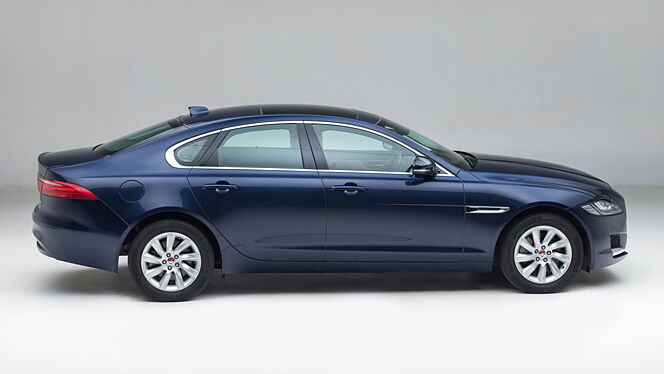
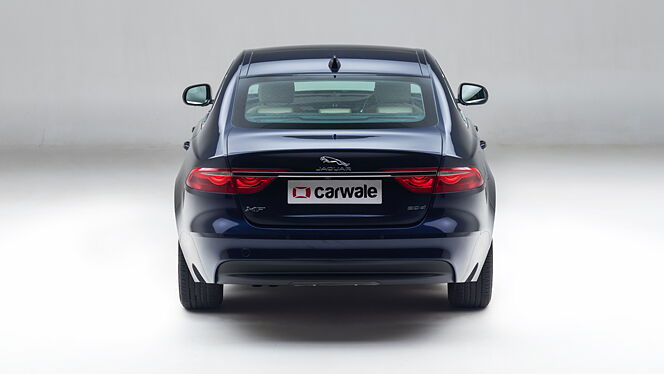
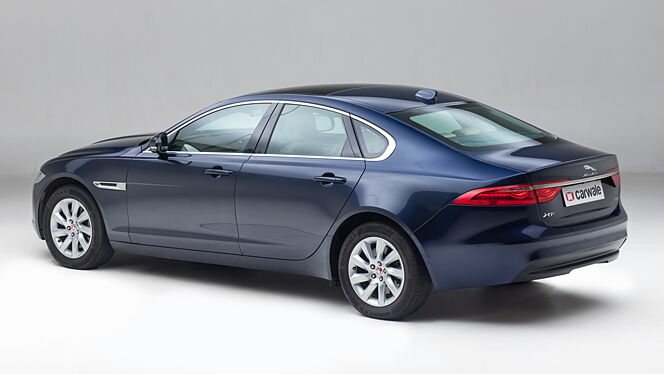
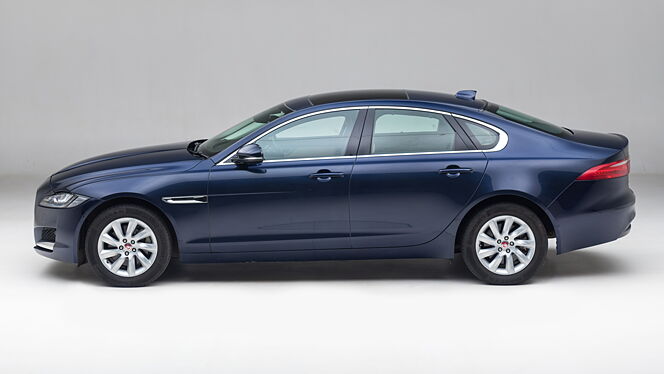
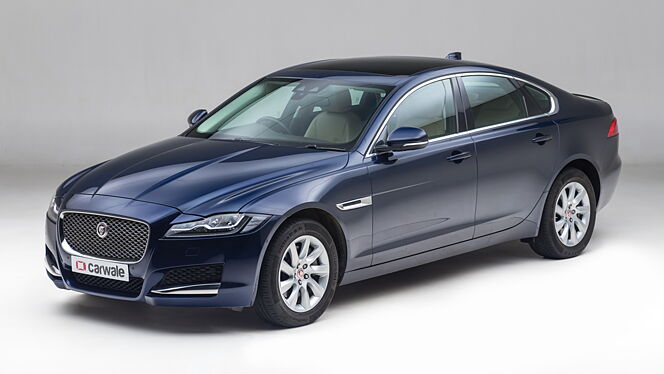
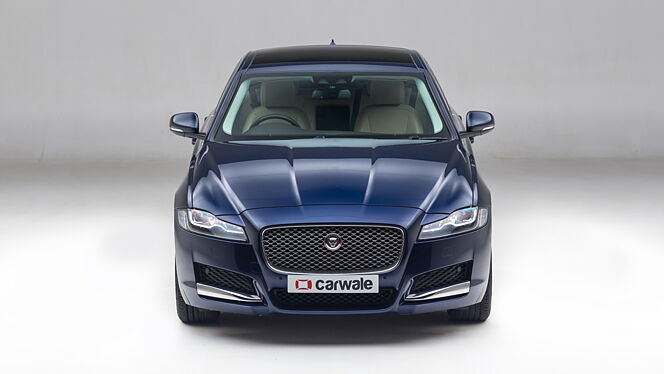
On the outside, there are no changes whatsoever to the XF 20t. Even though Jaguar has played it safe by taking the evolutionary route with the design, the XF oozes character and evokes emotion – that long bonnet and the XE-like headlamp and grille design are standout styling elements. Additionally, the thick splashes of chrome on the front bumper, window line, the boot-lid and those gorgeous 9-spoke alloy wheels give the XF a premium look in a way that’s elegant but not pretentious.
How is it on the inside?
The XF 20t that we have here can be had only in the mid-spec Prestige variant, which means you get most of the niceties. You get a 10-inch display for the infotainment system which now supports smartphone mirroring, a sunroof, ambient lighting, leather seats, electrically adjustable front seats, a rearview camera and plenty more. That said, the top-spec Portfolio variant (available in a more powerful state of tune) gets a premium audio system, digital instrument console, four-zone climate control and keyless entry as additional features.
In terms of appearance, it’s not too difficult to spot the design layout and the materials shared with other models from the JLR stable. Nevertheless, the dashboard is neatly designed with a lot of horizontal surfacing. It even retains the previous-gen XF’s super cool start-up sequence which includes a rotary gear selector that rises up from the centre console along with the side air vents that roll up in harmony. Theatrical start-up aside, the XF works well as a four-seater. The front seats are large and immensely supportive with more than enough thigh support and sufficient bolstering. Similarly, the rear seat is wide and nicely contoured with a deep squab, meaning you sit in it rather than on it. That said, space and comfort isn’t as generous as the 5 Series and nowhere close to the long-wheelbase E-Class.
All in all, the XF’s cabin may lack that ultimate sense of space but it does feel premium and different from the German brigade. It’s well put together and the use of padded materials and light textures give it a luxury feel.
How does it drive?
Let’s be honest, if you are eyeing the XF 20t, chances are that you are looking forward to what’s under the hood more than rear seat space or cabin quality. In that case, the XF gets a 1997cc, four-cylinder engine that makes 200bhp. There's 320Nm on tap from low revs, however, the XF doesn't hurl itself out of the block like the smaller XE – blame it on the added weight. Instead, the real meat from this engine is in the mid-range, where the XF is at its most forceful state. Under normal driving conditions, there is little lag and the engine feels responsive, making the XF fairly effortless.
What’s more, the shifts from the ZF 8-speed gearbox are quick yet smooth enough to be indiscernible. Unlike cars with dual clutch autos, this torque converter allows the XF to pick up speed from standstill in a linear manner with no hesitancy whatsoever. However, there is some hesitancy to kick-down in D when you floor the pedal. The gearbox is a little slow to react although you can put the car in Dynamic mode and the gearbox in S for quicker reactions. The Dynamic mode, in fact, sharpens the throttle response and makes the gearbox more engaging.
Modest power output aside, the XF 20t actually provokes you to have a go on your favourite twisty road, and with a great deal of poise thanks to the high levels of grip and excellent chassis balance. Unlike the E Class or even the new 5 Series, the XF darts into corners with great agility and the quick steering is precise and has loads of feel. The ride quality is equally impressive, too. Although we wouldn’t say it’s simply unfazed by sharp potholes and big bumps, the XF deals with bad roads better than you might expect. Thanks to the high profile tyres, the ride quality has a soft edge to it and unlike its predecessor, the suspension can take big jolts without sounding clunky or unnerving.
Should I buy one?
For a car that has been around for over three years, the XF still puts up a worthy fight. It’s priced well, decently equipped and surprisingly good to drive. The engine in the 20t model may not be a powerhouse but the XF’s grip levels and chassis balance make up for it duly.
Where does it fit in?
The XF 20t is priced at Rs 65.20 lakhs on-road Mumbai. The more powerful version, meanwhile, is priced at Rs 72.81 lakhs. As for its rivals, the BMW 530i comes in at Rs 70.31 lakhs whereas the Mercedes E 200 is priced between Rs 68.31 lakhs and Rs 73.02 lakhs.
Pictures by Kaustubh Gandhi
XF Prestige Petrol [2017-2020] Specifications & Features
- Specifications
- Features
- Specifications
- Features
Specifications
Engine & Transmission
- Engine1997 cc, 4 Cylinders Inline, 4 Valves/Cylinder, DOHC
Timely services will keep a motor efficient and in top shape.
- Fuel TypePetrol
All cars in India either run on petrol, diesel, CNG, LPG or electric power.
- Max Power (bhp@rpm)247 bhp @ 5500 rpm
Gives a good idea of the performance of the vehicle under full thrust. A higher figure here usually means a higher top speed as well.
Higher the power, the peppier the engine but it can also affect fuel economy.
- Max Torque (Nm@rpm)365 Nm @ 1500 rpm
Relates to in-gear acceleration. A higher figure here means better roll-on acceleration, fewer gear shifts, and possibly better fuel efficiency.
The more torque at low RPM range makes the engine feel more responsive. It also allows the engine to run smoothly without too many gear changes.
- Mileage (ARAI)13.12 kmpl
This is the maximum fuel efficiency that an engine gives. All numbers are provided by the manufacturer based on tests conducted and specified by the standards of the ARAI (Automotive Research Association of India)
Such fuel efficiency attained while driving in special conditions makes it unlikely to get it in real-world conditions
- DrivetrainRWD
Cars come with different drivetrain configurations depending on the segment.
Front-wheel drive (FWD) is most common in mainstream cars while expensive cars or SUVs come with rear-wheel drive (RWD) or all-wheel drive (AWD).
- TransmissionAutomatic - 8 Gears, Paddle Shift, Sport Mode
Type of transmission used to transfer power from the engine to the wheels
A manually operated transmission is the most popular type, thanks to its simplicity and low cost. Varied types of automatic transmissions are also available.
- Emission StandardBS 4
Set by the Indian Government, this governs the amount of air pollutants released by cars to make the atmosphere safer for humans.
- Turbocharger / SuperchargerTurbocharged
Manufacturers today offer turbochargers to boost engine power without affecting its fuel economy. Superchargers are found in more expensive cars but on the downside, they are not very efficient.
Turbochargers are more effective but require plenty of heat management. Superchargers, meanwhile, offer linear bump in power but they are comparatively more complex.
Dimensions & Weight
- Length5067 mm
The length of the car decides its segment. In India, cars that are less than 4 metres in length enjoy reduced excise duties.

- Length: 5067
Longer length results in more cabin space. It also adds to straight line stability.
- Width2091 mm
A car's width is defined as its widest point without its mirrors.
- Width: 2091
Although more width gives you more lateral space inside the cabin, it makes the car more difficult to park in narrow spots.
- Height1457 mm
The height of the car denotes the highest point of the vehicle from the ground.
- Height: 1457
Taller the car, the more headroom there is on offer inside the cabin. However, a tall boy stance also affect the car’s centre of gravity which can cause more body roll.
- Wheelbase2960 mm
The space between the center of the front and rear wheels.
- Wheelbase: 2960
The longer the wheelbase, the more space there is inside the cabin.
- Ground Clearance134 mm
It’s the space between the lowest point of the car and the ground.
- Ground Clearance: 134
If the car has a good amount of clearance, it’s easier for it to clear big speed breakers and overall, deal with bad roads.
- Kerb Weight1756 kg
The total weight of the vehicle with all the standard equipment and all the required fluids.
A lightweight car will always be more efficient and easier to manoeuvre whereas a heavy car would give you a sense of solidity while driving.
Capacity
- Doors4 Doors
The number of doors define the category of car. For example – four door means sedan, two-door means coupe while five-doors usually refer to a hatchback, MPV or an SUV.
- Doors: 4
- Seating Capacity5 Person
The number of people that can be seated comfortably in the car, which has also been mandated by the car manufacturer.
- Seating Capacity: 5
- No of Rows2 Rows
Smaller cars usually have two rows which can seat five, but some SUVs and MPVs have three rows and can seat around 7-8 passengers.
- Bootspace505 litres
Boot space defines how practical the car is with respect to how much luggage it can carry.
- Bootspace: 505
A boot with a large and wide opening is ideal for loading heavy items. Additionally, a lower loading height also makes it easy to put in luggage.
- Fuel Tank Capacity74 litres
The official volume of the fuel tank of a car, usually denoted in litres.
If a car has a large fuel tank, it can cover long distances without refuelling.
Suspensions, Brakes, Steering & Tyres
- Front Brake TypeDisc
Most of the vehicles sold in India get ventilated or non-ventilated disc brakes upfront.
- The ventilated discs are more popular thanks to them providing better stopping power and it also works well in hot conditions.
- Rear Brake TypeDisc
In affordable cars, drums brakes are fitted at the rear as they are cost effective.
Disc setup at the rear is now getting more popular as cars are getting faster in the real world.
- Minimum Turning Radius5.8 metres
The official kerb-to-kerb minimum radius a car takes to complete a 180-degree turn.
Shorter the turning radius, the lesser space you need to make a tight turn or to take a U-turn.
- Steering TypePower assisted (Electric)
Almost all steering systems in cars today have an assist to help park them better at low speeds - these can be hydraulic, electro-hydraulic or electric.
- WheelsAlloy Wheels
The wheels used on cars are either steel rims with plastic wheel cover hub or alloy wheels on higher spec models or expensive cars.
Razor cut, or diamond cut alloy wheel design are not getting more popular. Manufacturers usually offer these in top-end trim of their car models.
- Spare WheelAlloy
Important in a country with varying quality of roads, spare wheels ensure one doesn’t get stranded when one of the main tyres gets damaged.
Select premium car models feature space savers (smaller than the stock wheels) to save on boot space.
- Front Tyres235 / 55 R17
The profile/dimension of rubber tyre that fits on the front wheels.
- Rear Tyres235 / 55 R17
The profile/dimension of rubber tyre that fits on the rear wheels.
Features
Safety
- Overspeed Warning-
Mandatory safety system for cars sold in India, a single beep is emitted after 80kmph and continuous ones after 120kmph
- Lane Departure Warning-
This function detects when the car is drifting out of its lane and cautions the driver through audio/visual alerts
- Emergency Brake Light Flashing-
The brake lights flash in a quick intermittent fashion to indicate to the following vehicles to slow down quicker than usual
- Puncture Repair Kit-
These enable users to repair a puncture effortlessly, saving the time/effort involved in replacing it with the spare wheel
Avoid driving on a flat/deflated wheel too long as it can cause expensive repairs
- Forward Collision Warning (FCW)-
The driver is warned of an impending crash due to stopped/slowing vehicles ahead of them
- Automatic Emergency Braking (AEB)-
This system automatically stops the car if it senses an obstacle where the driver fails to take action
It is imperative to pay attention while driving and rely less on such systems
- High-beam Assist-
This feature spots oncoming vehicles at night to shift the headlight between high and low beam
- NCAP Rating-
The official crash test safety rating given to a car by one of the many testing agencies around the world
- Blind Spot Detection-
Blind Spot Detection systems use sensors to detect and alert the driver of any sudden movements in his/her blind spot
- Lane Departure Prevention-
This feature automatically steers the car to prevent it from moving out of the lane when there is no driver input
- Rear Cross-traffic Assist-
An assistance feature that alerts the driver who is backing out of a parking space if another vehicle is approaching
One must always be cautious of pedestrians, children and other obstacles when backing up.
- Airbags6 Airbags (Driver, Passenger, 2 Curtain, Driver Side, Front Passenger Side)
- Rear Middle Three Point seatbeltYes
Safer three-point seatbelts for passengers seated in the middle of the second row of seats.
Budget cars are usually fitted with more economical lap belts for the middle-occupant.
- Rear Middle Head RestNo
A headrest for the middle occupant of the second-row of seats.
Budget cars are usually not offered with headrests for the middle occupant of the second-row to save on costs. Headrests are instrumental in reducing whiplash injuries in case of an accident
- Tyre Pressure Monitoring System (TPMS)Yes
A digital gauge that provides the live status of the air pressure in every tyre of a car.
For accurate readings, ensure that the sensors on the rim are not tampered with during any wheel/tyre repairs
- Child Seat Anchor PointsYes
Anchor points or strap systems built into car seats to keep child seats in place, especially during a crash
ISOFIX is an international standard for child seat anchor points, but not all car manufacturers follow this standard
- Seat Belt WarningYes
Mandatory fitment in cars sold in India, emits loud beeps when it detects that occupants are not wearing their seatbelts.
Seat belt warning is mandatory for front-seat occupants, but it is recommended that all occupants wear seat belts.
Braking & Traction
- Anti-Lock Braking System (ABS)Yes
An electronic system that prevents the tyres from locking and skidding in emergency braking situations by pulsing the brakes (quickly releasing and reapplying the brakes)
ABS is a great accident prevention technology, allowing drivers to steer while braking hard
- Electronic Brake-force Distribution (EBD)Yes
An electronic system that redirects braking forces among the four brakes to stop the car as quickly and stably as possible
- Brake Assist (BA)Yes
A system that increases brake pressure to help the car stop quicker
Even when emergency braking, it is observed that drivers don’t apply maximum brake pressure through the pedal, the BA system provides additional pressure to help stop the car quicker
- Electronic Stability Program (ESP)Yes
System designed to improve car stability and control, especially when the car is accelerating.
ESP or ESC cannot increase traction but rather improve control or help regain control in slippery conditions.
- Four-Wheel-DriveNo
A system that sends the car's power to all the four wheels at the same time
- Hill Hold ControlYes
A feature that prevents the car from rolling backwards when stopped on a slope
- Traction Control System (TC/TCS)Yes
This system cuts power to those wheels that are spinning without grip/traction
Given the option, keep traction control on all the time.
- Ride Height AdjustmentNo
A feature that allows the user to alter the ride height of the car
Be it driving over tall obstacles or unloading heavy baggage from the boot; a helpful feature indeed
- Hill Descent ControlNo
A feature that limits the car's speed without any driver input while traversing down descents
- Limited Slip Differential (LSD)No
This function prevents wheelspin and maximises traction by shuffling torque between wheels
It is also a nifty safety feature since it offers more control over a vehicle's power delivery
- Differential LockNo
Locking differentials split power/torque evenly among both tyres on an axle.
In off-road vehicles, locking differentials allows for better traction when one of the wheels is in the air, in FWD/AWD cars allows for better corner traction and in RWD sports cars allows for drifting around corners.
Locks & Security
- Engine ImmobiliserYes
A security device that prevents the engine from being started unless the key is present
- Central LockingRemote
This feature let's one unlock all the doors remotely or with a key
- Speed Sensing Door LockYes
This feature automatically locks the car's doors when it reaches a preset speed
A convenient feature for those who can't remember to lock the doors
- Child Safety LockYes
Such locks are built into the rear doors to prevent rear seat occupants from opening the doors
Comfort & Convenience
- Electronic Parking Brake-
- Air ConditionerYes (Automatic Dual Zone)
The different types of air-conditioning systems used to cool the cabin
Maintaining the lowest temperature and first blower speed offers the best results.
- Front ACIndividual Fan Speed Controls
- Rear ACVents Behind Front Armrest, Individual Fan Speed Controls
- Third Row AC Zone-
- HeaterYes
This feature allows warm air to pass through the air-con vents for heating the cabin
- Vanity Mirrors on Sun VisorsCo-Driver Only
Compact mirrors fitted to the inside of the sunvisor
- Cabin Boot Access-
The option of being able to access the boot space while sitting inside the car
- Anti-glare MirrorsElectronic - Internal Only
These mirrors negate the glare from headlight beams of cars behind you
Since a large chunk of people love driving around in their high beam, these mirrors come in handy
- Parking AssistNo
A feature that aids drivers park with ease and greater precision using sensors/cameras
It comes as a boon for drivers who are not used to parking in tight spots
- Parking SensorsFront & Rear
Sensors that are usually located on the bumpers of a car to assist/alert the driver while parking
It takes the stress out of manoeuvring in confined spaces
- Cruise ControlYes
A system that automatically controls the speed of the car
- Headlight and Ignition On ReminderYes
An alert that warns one from leaving the car with the headlight and ignition switched on
- Keyless Start/ Button StartYes
When fitted, this system allows the car to be switched on without removing the key from the driver’s pocket or vicinity.
Keyless entry and start/stop (KESS) systems in some cars also include operation via a smartphone.
- Steering AdjustmentTilt & Telescopic
A function where the steering wheel moves up/down, in/out as per the driver's requirement
When both rake and reach adjustments are incorporated, it makes for a tailormade driving position
- 12V Power Outlets1
This socket provides current to a cigarette lighter style 12 volt plug
It helps charge smartphones, tablets, laptops, rechargeable batteries and other USB chargers. It also powers a compressor that inflates tyres and the humble cigarette lighter!
Telematics
- Find My Car-
An app based feature that allows one to find where their car is located/parked
- Check Vehicle Status via App-
The requisite app will provide information regarding various functions such as speed and fuel alerts
- Geo-fence-
A service that triggers actions like notifications and security alerts when a car enters/leaves a set location
- Emergency Call-
A call that's made automatically by the car to the local emergency services in the event of a crash
- Over The Air (OTA) Updates-
Similar to how smartphones receive updates, a vehicle too (if equipped with connected car features) receives updates over the air via a cellular or WiFi connection
Timely installation of updates keeps the system up-to-date
- Remote AC: On / Off via App-
The smartphone app turns on the car's AC to attain the required cabin temperature even before one boards it
More so comes in handy when cabin temperatures are extreme before you board the vehicle
- Remote Car Lock/Unlock via App-
The smartphone app allows one to remotely lock/unlock the car's doors from just about anywhere
This function is helpful when the key fob isn't working properly
- Remote Sunroof: Open / Close via App-
The smartphone app lets you remotely open/close the sunroof of your car
This function saves valuable time by not having to be physically present to shut the sunroof, which could otherwise result in the interiors getting damaged by rain/intruders.
- Car Light Flashing & Honking via App-
The smartphone app sounds the horn and flashes the headlights of your car so that you can locate it
- Alexa Compatibility-
Alexa is a virtual assistant technology that allows voice interaction to perform various tasks
An invaluable function that allows the driver to keep their eyes on the road
- Remote Parking with Key-
Seats & Upholstery
- Massage Seats-
- Driver Seat Adjustment14 way electrically adjustable (seat forward / back, backrest tilt forward / back, headrest up / down, seat height up / down, lumbar up / down, lumbar forward / back, seat base angle up / down)
- Front Passenger Seat Adjustment-
- Rear Row Seat Adjustment-
Rear seat adjustments make for an enlarged luggage space when there's lots of baggage to haul.
- Seat UpholsteryLeather
When it's time to replace, use a fabric that grips and are inherently cool to the touch
- Leather-wrapped Steering WheelYes
Leather not only grips your palms well, but it also offers a premium feel
- Leather-wrapped Gear KnobYes
- Driver ArmrestNo
The armrest located between the front passengers which helps comfort the driver's arm while driving
- Rear Passenger Seat TypeBench
- Third Row Seat TypeNo
This row could either be a bench or a pair of jump/captain seats
When the need arises, the last row can double up as space for luggage.
- Ventilated SeatsFront only
Cooled air from the AC system passes through the perforations on the seat to comfort the occupant
- Ventilated Seat TypeHeated and cooled
- InteriorsDual Tone
Depicts if the cabin comes with a single or dual-tone colour scheme
- Interior Colours-
The various color shades used within the cabin
- Rear ArmrestYes
- Folding Rear SeatNo
Some rear seats have the option to be be folded to offer more practicality
- Split Rear SeatNo
Sections of the rear seat are capable of being folded down separately
This function bumps up practicality as the boot space increases when required.
- Front Seatback PocketsYes
The pockets behind the front seats which help rear seat occupants store their stuff
- HeadrestsFront & Rear
The portion extending from or fixed to the seat that supports the head
Storage
- Cup HoldersFront & Rear
- Driver Armrest StorageYes
The storage space within the armrest that's located between the front passengers
- Cooled GloveboxNo
A feature where cool air from the air-conditioner is diverted to the glovebox
- Sunglass HolderYes
Doors, Windows, Mirrors & Wipers
- ORVM ColourBody Coloured
Mirrors that are placed on the car's exterior, around the door, to aid the driver see behind the vehicle
Placing/sticking wide-angle mirrors on the ORVMs can enhance the rear view tremendously.
- Scuff Plates-
This is fitted where the door meets the frame to protect it from scratches and dust
Not using scuff plates may result in the door sill giving away prematurely.
- Soft-close Door-
- Power WindowsFront & Rear
When the car's windows can be raised/lowered by pressing a button/switch
In emergencies where the power window electronics have jammed, exit the vehicle by kicking out the windscreen
- One Touch DownAll
This feature allows a user to roll down the windows with a single press of a button
This feature reduces the time your hand is away from the steering wheel
- One Touch UpAll
This feature allows a user to roll up the windows with a single press of a button
This feature reduces the time your hand is away from the steering wheel
- Adjustable ORVMsElectrically Adjustable
Different ways of adjusting the door mirror to suit the driver's requirement
Tremendously aids driving judgement in a variety of tight situations.
- Turn Indicators on ORVMsYes
Turn indicators are fitted to the door mirrors for improved visibility
- Rear DefoggerYes
A feature that removes condensed water droplets from the rear windscreen to improve visibility
Turning air recirculation off helps gain faster results.
- Rear WiperNo
Although a seemingly minuscule feature, it negates the hatchback's/SUV's inherent ability to retain dirt/water on the rear windscreen.
- Exterior Door HandlesBody Coloured
- Rain-sensing WipersYes
When the system detects water droplets on the windshield, it activates the wipers to improve driver visibility
This feature can be intrusive especially while you are negotiating a tricky bend at a higher speed
- Interior Door HandlesChrome
- Door PocketsFront & Rear
- Side Window BlindsRear - Manual
These protective shields keep the sun's rays from affecting the occupants
With restrictions on darker sun films, these blinds are a huge relief on sunny days.
- Bootlid OpenerInternal with Remote
The various methods of opening the boot lid
- Rear Windshield BlindManual
A manually/electrically operated, usually translucent, screen designed to reduce the sunlight filtering into the cabin through the rear windshield to improve rear-cabin comfort and privacy
Exterior
- Sunroof / MoonroofElectrically Adjustable
Ensure the sunroof is closed before exiting the vehicle to prevent dirt/rain from entering the cabin
- Roof-mounted AntennaYes
The compactness of the roof-mounted antenna prevents its damage in certain situations
- Body-coloured BumpersYes
Having parking sensors will save your bumper paint if it brushes by obstacles
- Chrome Finish Exhaust PipeYes
- Body KitNo
Functional or purely aesthetic parts added to the car's body such as side skirts and roof/bonnet scoops
- Rub-stripsNo
A strip of rubber fitted to the sides of the car's doors or bumpers to prevent dents and dings
Opt for quality strips because the cheaper ones tend to come off too soon/look shabby.
Lighting
- Ambient Interior Count-
- HeadlightsLED
- Automatic HeadlampsYes
Such headlights automatically switch on and off when they sense bright or dark driving conditions
Keeping them switched on at all times gives the user the best results
- Follow Me Home HeadlampsYes
The headlamps remain lit for sometime when the car is locked/unlocked to aid user visibility in dark surroundings
- Cornering HeadlightsNo
These lights turn left and right based on steering inputs to illuminate the sides of the car
- TaillightsLED
Inspect tail lamp bulbs at periodic intervals for optimum safety.
- Daytime Running LightsLED
Lights that automatically switch on during the day for increased visibility
- Fog Lights-
A type of lamp that improves driver visibility while driving through fog
The yellow/amber fog lights are preferable as they are warm to the eyes and do not reflect from the fog.
- Ambient Interior Lighting-
Additional lighting apart from the roof-mounted courtesy/map lamps. These are added for a sense of style and luxury rather than utility.
- Puddle Lamps-
Incorporated into the bottom section of a car's door mirrors, they light up the ground underneath the front door when the door is unlocked
- Cabin LampsFront and Rear
- Light on Vanity MirrorsCo-Driver Only
A lamp that's located around the vanity mirror behind the sun visor
- Rear Reading LampYes
- Glovebox LampYes
- Headlight Height AdjusterYes
Allows adjustment to the height of the headlight beams via a switch on the dashboard
Instrumentation
- Instantaneous ConsumptionNo
It indicates how much fuel is being used that very instant your car is moving
- Instrument ClusterAnalogue
A screen situated mostly behind the steering wheel displaying information and warning lights regarding the car's various vitals
- Trip MeterElectronic 2 Trips
- Average Fuel ConsumptionYes
The amount of fuel consumed by the engine (kmpl) is displayed on the instrument cluster in real time
A glance will help you maintain better fuel efficiency and save money
- Average SpeedYes
The total distance traveled divided by the time taken to cover that distance
The higher the average speed, the quicker you were on that journey/trip
- Distance to EmptyYes
The approximate distance a car will run with the amount of fuel remaining in the tank
- ClockDigital
- Low Fuel Level WarningYes
This alert should be taken as a final warning to head straight to the fuel pump
- Door Ajar WarningYes
A warning light that pops up on the instrument cluster when the doors are not shut properly
- Adjustable Cluster BrightnessYes
The brightness of the instrument cluster can be adjusted via controls
It comes in handy to improve instrumentation visibility between day and night by toggling brightness.
- Gear IndicatorYes
It notifies the driver about which gear the car is being driven in and can also suggest down- or upshifting to improve efficiency
- Shift IndicatorDynamic
Notifies the driver about the optimum instances to shift gears
It comes in handy to derive the best fuel efficiency and engine component longevity
- Heads Up Display (HUD)No
This function allows specific data like 'speed' to reflect/project on the windscreen in the driver's line-of-sight
- TachometerAnalogue
An instrument that measures engine speed in revolutions-per-minute (rpm)
Ideally, the tachometer helps a driver know when to shift gears in a manual gearbox.
Entertainment, Information & Communication
- Smart ConnectivityAndroid Auto (Yes), Apple Car Play (Yes)
The ability to connect to the internet and communicate with smart devices to perform various functions
- DisplayLCD Display
A touchscreen or display that acts as a user's interface to the various functions of the car
- Touchscreen Size-
- Gesture Control-
The ability to recognise and interpret specific movements of the occupant to perform functions without any direct contact with any of the car's switches or buttons
- Display Screen for Rear PassengersNo
A touchscreen or display that acts as a user's interface to the various functions of the car
- Integrated (in-dash) Music SystemYes
The music player that comes factory fitted
- Speakers6+
Number of speaker units as part of a car’s surround-sound system
- Steering-mounted controlsYes
The widely-used controls are placed on the steering wheel to ease driver usage
- Voice CommandYes
When the car's system responds to the occupant's voice to perform certain features
- GPS Navigation SystemYes
A system that uses satellite signals to help the driver with directions to reach a destination
- Bluetooth CompatibilityPhone & Audio Streaming
Allows devices with bluetooth functionality connect wirelessly to the car's infotainment system
Using Bluetooth functionality offers a cable-free experience
- AUX CompatibilityYes
The car's music player can play tracks off a portable device via an aux cable
Bluetooth can make AUX cables look ancient, but unlike the former, there's hardly any loss in sound quality
- AM/FM RadioYes
Is the music system's capability of playing broadcasted radio channels
If radio signals are weak, one can stream music
- USB CompatibilityYes
When tracks can be played from a USB/pen drive
- Wireless Charger-
These pads can charge equipped smartphones without using a cable
Given the option, opt for fast wireless charging.
- Head Unit Size2 Din
The size of the music system fitted to a car. Traditionally 1-DIN or 2-DIN, are being replaced by touchscreen units of varying sizes.
- iPod CompatibilityYes
- Internal Hard DriveNo
The storage device within the car's infotainment system
- DVD PlaybackNo
The capability of the infotainment system to play DVDs
Manufacturer Warranty
- Battery Warranty (In Years)-
The number of years the EV battery is covered under the manufacturer's warranty
More the years, the better
- Battery Warranty (In Kilometres)-
The number of kilometres the EV battery is covered under the manufacturer's warranty
More the kilometres, the better
- Warranty (In Years)3
The automaker can void the vehicle's warranty if the owner has fitted aftermarket components.
- Warranty (In Kilometres)Unlimited
The automaker can void the vehicle's warranty if the owner has fitted aftermarket components.
Rear row
- Seat Base: Sliding-
In these instances, the seat is not fixed and can slide back and forth
Other XF Variants
| Variants | Price | Specifications | Specifications | |
|---|---|---|---|---|
Rs. 54.36 Lakh | 5 Person, RWD, 365 Nm, 134 mm, 1756 kg, 505 litres, 8 Gears, Electrically Adjustable, 74 litres, No, No, Front & Rear, 5067 mm, 2091 mm, 1457 mm, 2960 mm, 365 Nm @ 1500 rpm, 247 bhp @ 5500 rpm, Remote, Yes (Automatic Dual Zone), Front & Rear, 1, No, Yes, Yes, 1, Yes, Yes, No, 6 Airbags (Driver, Passenger, 2 Curtain, Driver Side, Front Passenger Side), Yes, 1, BS 4, 4 Doors, 13.12 kmpl, Petrol, Automatic, 247 bhp | Get Offers from Dealers |
XF Alternatives



XF Prestige Petrol [2017-2020] Colours
The following 4 colors are available in XF Prestige Petrol [2017-2020].


XF Prestige Petrol [2017-2020] FAQs
- Home
- Jaguar Cars
- XF
- Prestige Petrol [2017-2020]