Why Would I Buy It?
- Sophisticated and engaging hybrid powertrain
- Impressive fuel efficiency
- Improved ride quality
Why Would I Avoid It?
- Rivals offer more features
- Reduced boot space and no spare wheel
- Weak resale value
Introduction

The new Renault Duster arrived at the start of this year with a choice of two petrol engines, a 1.0-litre and a 1.3-litre turbo-petrol. Renault also kept everyone's attention by promising a hybrid by the end of the year. That time is now, and the Duster Hybrid has finally arrived. Renault said the hybrid was sold out at the start of the year, though with limited production, that probably says more about supply than demand. Either way, it becomes the third powertrain in the Duster line-up, and one of the more sophisticated hybrid systems on sale here. We have now driven it on Indian roads, so let's find out how it actually works.
Exterior Design
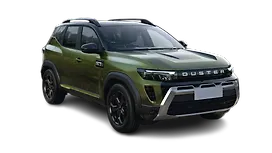
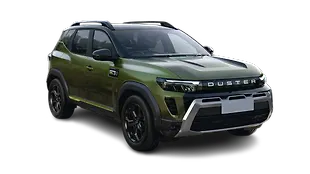
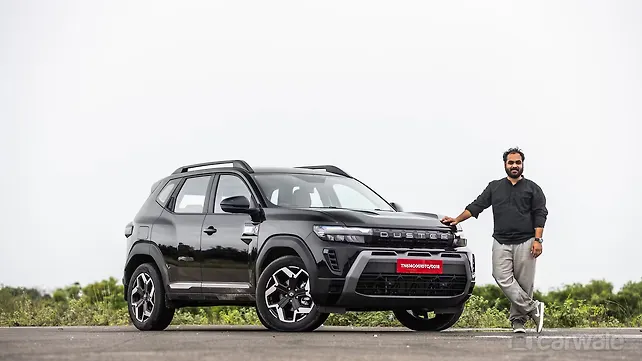
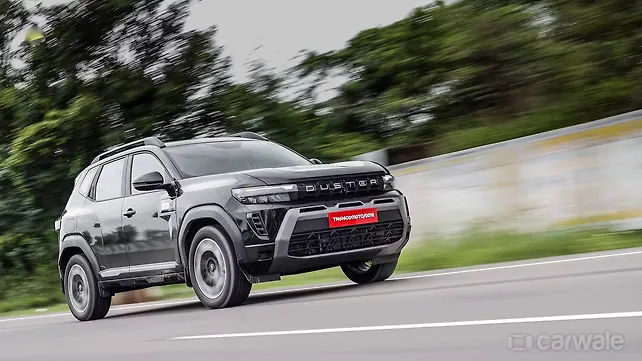
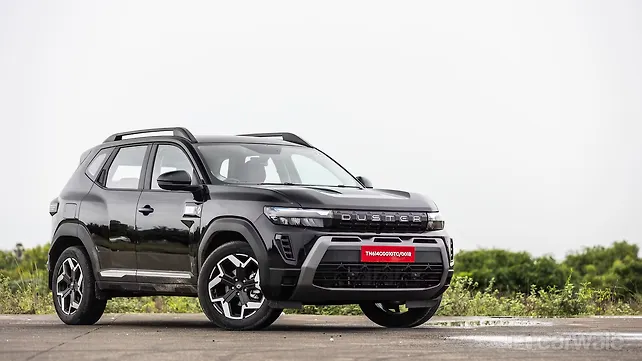
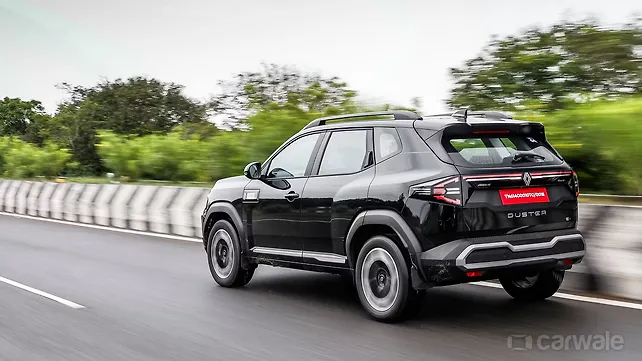
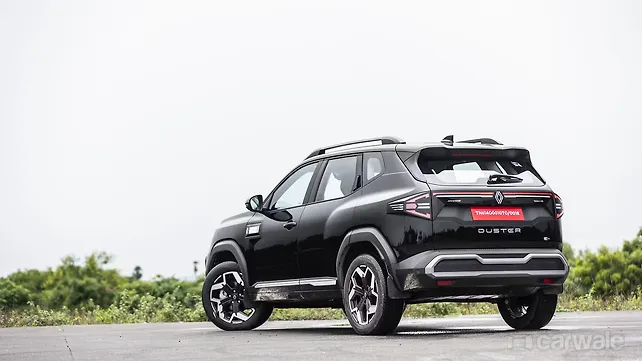
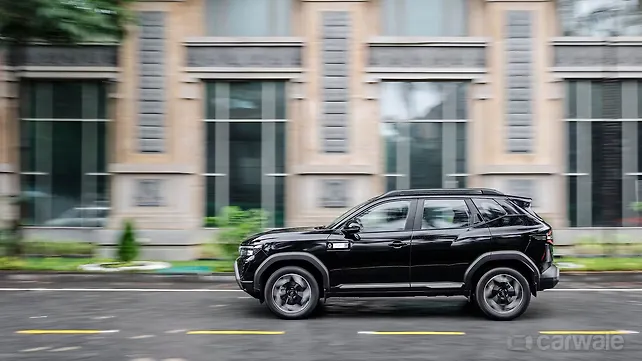
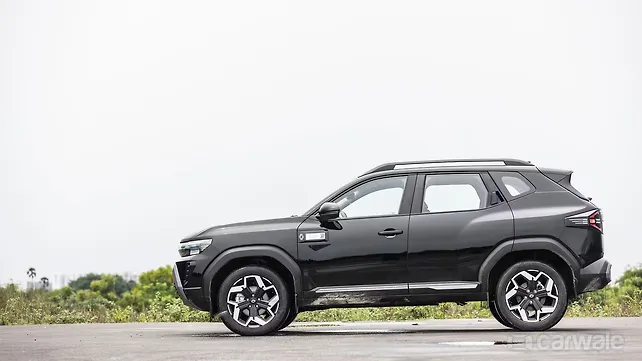
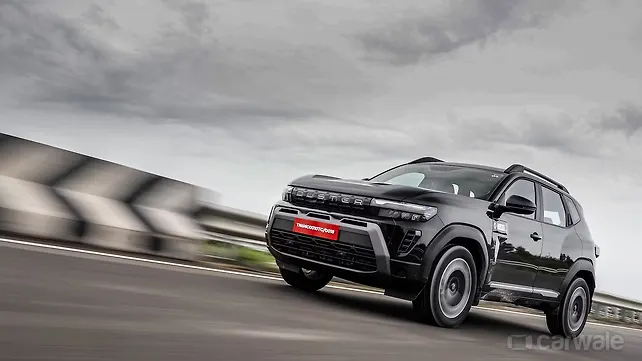
The Duster Hybrid looks exactly like the Duster that launched earlier this year. It measures 4.3 metres in length, with a wheelbase of 2,657mm, a 50-litre fuel tank and 212mm of ground clearance, all unchanged. You still get LED headlamps with the eyebrow-shaped DRLs, the slightly pushed-in section on the tailgate, 18-inch alloy wheels, roof rails, and the same colour options as the rest of the range.
A few touches set it apart from the petrol. The Duster lettering on the grille is now illuminated, but there is a catch. It does not stay lit while the car is running. It lights up for about 20 to 30 seconds when you lock or unlock the car, which is a bit gimmicky. You also get E-Tech badges on the front doors and the tailgate. That is all that distinguishes it, and it is fine, because the design is fresh and there was no need to change it.
Interior Design
The dashboard layout, seats, centre console, steering wheel, buttons and both screens carry over unchanged. The new part is the theme. This is the top-spec Emotion variant, and it gets Dune Brown leatherette on the seats, centre armrest, lower door pads and dashboard, replacing the olive green on the top petrol. On the whole, it looks a bit more premium.
The seats are comfortable but could use better cushioning. As on the petrol, a few plastics need work, particularly the lower half of the dashboard and the door pads. Renault has updates planned for 2027, so we hope it addresses this. The carbon-look inserts on the door pads and dashboard are the same as before. The centre console has two cup holders under a rollable cover and the same drive selector as the automatic.
Features
For a top-spec car it is decently equipped, with a 10.25-inch digital instrument cluster with customisable views and a 10.1-inch infotainment system. As is typical for Renault, some things are a bit quirky. Physical buttons sit above the screen, and a stalk on the steering column controls the infotainment. It feels oddly placed at first but turns out to be convenient. You also get fully physical AC controls, Type-C charging ports, wireless charging, a big panoramic sunroof, and electrically adjustable, ventilated front seats.
There are some cutdowns too. Compared with the top Iconic petrol, you miss out on Level 2 ADAS and side parking sensors. The IRVM is manual rather than auto-dimming, and the driver's seat has no lumbar support. Renault has trimmed these to keep the price in check. The Duster also lacks a head-up display and rear window blinds, which the segment already offers. So it is a mixed bag, and these are things Indian buyers look for at this price.
Space
The battery and two electric motors sit under the floor, so front and rear space is unchanged. The front seats offer adequate support, and the headrest angle is nicely judged. The second row is comfortable, with adjustable headrests for all three passengers. Three adults will fit if needed, but it gets slightly tight, though not a dealbreaker. The seats split 60:40.
That said, the real loss is boot space. It drops from 518 litres in the petrol to 372 litres here. There is also no spare wheel, only a puncture repair kit. There is room to fit a spare if you buy one as an accessory.
Storage
Practicality is as good as on the regular Duster, apart from the smaller boot. You get a decent glovebox and door pads that hold bottles in both rows. The centre armrest storage is big and deep, enough for half-litre bottles and more. There are also seatback pockets behind the front seats.
Infotainment System
The 10.1-inch Google-powered system is familiar by now. If you use an Android phone, it feels easy. Google Maps is built in, so you do not need to mirror your phone, and wireless Android Auto and Apple CarPlay are supported. There is a readout for AC temperature and fan speed that you can change from the screen, alongside the physical controls, and a physical button to switch the screen off and on. There are no ADAS functions to look for, since this variant does not have them.
Safety
With the hybrid version, you get six airbags, auto headlamps, and a tyre pressure monitor. What you miss out on is the full Level 2 ADAS package and the 360-degree camera. The rear camera is there, but its resolution and video quality are not great, and that needs improving.
Performance
The hybrid system here works differently from the strong hybrids from Japanese carmakers, and takes a more modern approach, combining five elements. These are a 1.8-litre four-cylinder petrol engine, a 1.4kWh battery that is almost twice the size of those on rival hybrids, a traction motor connected to the wheels, a high-voltage starter-generator, and a multi-mode automatic gearbox. Globally that gearbox is known as a dog-clutch unit.
On paper, Renault claims an ARAI-certified 29kmpl, about 1kmpl more than the claims for Maruti, Toyota, and Honda hybrids. Combined output is 158bhp and 208Nm, and the claimed 0-100kmph time is 9.6 seconds. Renault also says the system can run up to 80 per cent of city driving on electric power.
Our initial impressions of this powertrain are positive. The car always starts in EV mode, not on the petrol engine. In the city, you can go from standstill to over 50kmph on electric power alone. Even with a slightly heavier foot, it stays in EV mode, unlike other hybrids that switch to the engine to compensate. The larger battery lets it hold EV mode for a good while, even in stop-and-go traffic.
When the battery runs low, the petrol engine starts and runs the starter-generator, which charges the battery. That energy feeds the traction motor, so the car still drives on electric power. This is series mode, and the engine is acting as a generator. The other mode is series-parallel. When you want more power, on the highway or for a sudden burst of speed, the engine can drive the wheels directly. If you want more, the engine and the traction motor work together.
The result is a hybrid without the rubber-band effect you get with the e-CVTs of other hybrid cars. Power comes in when you ask for it, with no delay or hesitation. The gearbox works well too. At lower speeds, the electric side uses its two-speed gearing, and once you build momentum, the ratios for the petrol engine take over, resulting in an engaging drive compared to the hybrids we have driven before.
There is one downside, though. When the battery runs low and the starter-generator charges it, the engine gets noisy, and you can feel vibrations through the pedals. It is automatic, so you cannot control it, and it can happen while idling in traffic or on the move. It is short, but it is there.
Most of our driving ended up on electric power. After approximately 120km, we finished with more range showing than we started the day with, which is impressive. There is also an E-Save button on the dashboard. If you have depleted the battery and want it back quickly, pressing it makes the engine work harder and more often to charge the battery faster, giving you EV mode sooner.
It is a sophisticated system, and we have not seen anything like it in this part of the market. Performance is more than enough, never slow or laggy, and the mix of efficiency and performance is what hybrids have been missing until now.
Ride and Handling
The hybrid weighs about 80kg more than the petrol, and Renault has given it updated suspension with Frequency Dependent Dampers (FDD). This fixes what was slightly missing in the petrol Duster. The cushioning is better, and it absorbs undulations even at high speeds. At low speeds, the ride is absorbent and does not crash. Rough surfaces, broken roads, and speed breakers are handled well, and the underlying firmness of the petrol is gone.
You also get two steering modes. One keeps the steering light for the city, and the other weighs it up for a more engaging drive. The gear selector has a B mode alongside D, which mimics one-pedal driving. It is not as strong as the one-pedal drive in a full EV, but it increases regeneration to recharge the battery faster.
NVH
In EV mode, the Duster is smooth, with no engine noise. The exception is when the starter-generator comes into play, which adds some noise and vibration through the pedals. It switches on and off automatically, and it is the one intrusive thing. Otherwise, the cabin is well insulated. We noticed no wind or road noise, and the suspension does not send noise into the cabin.
Verdict
The mid-size SUV segment has not warmed up to hybrids. Petrol, CNG, and electric are what sell, while diesel and hybrid remain a minority. The Duster Hybrid is priced from Rs. 16.99 lakh to Rs. 19.49 lakh ex-showroom, which is almost the same range as the Maruti Suzuki Victoris and the Toyota Urban Cruiser Hyryder. Both already have hybrids, but hybrids make up a small share of their sales.
The Duster Hybrid has the most sophisticated hybrid system of the lot, and it is engaging to drive, but it is a harder sell. Furthermore, the Duster is missing features, such as ADAS and a 360-degree camera, that rivals offer along with a hybrid powertrain. The price difference is small, but if you want the most sophisticated powertrain, it could be worth it. If you want the most features, other cars might suit you better.
Pictures by Kapil Angane