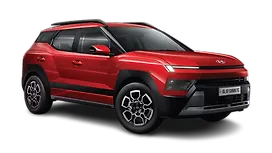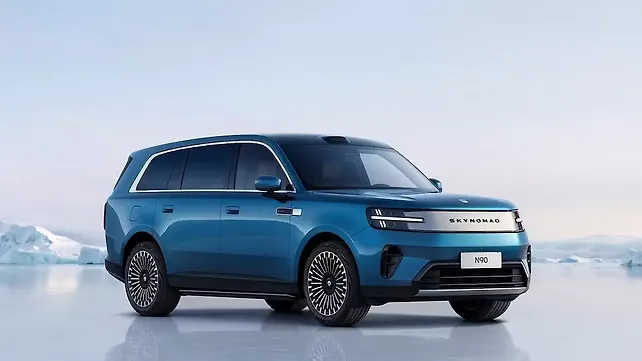
Xiaomi has entered the extended-range SUV segment with the new SkyNomad range in China. It comprises two models — the seven-seater N90 Max and the five-seater N70 Max AWD. While the N90 Max is the larger flagship, both SUVs follow the same philosophy: combine electric driving with the practicality of a range-extender powertrain and pack the cabin with technology.

But the interesting part isn't just the range or the feature list. Xiaomi has approached the SkyNomad as a reconfigurable living space, rather than simply another three-row SUV. And that could be its biggest USP.
Xiaomi SkyNomad N90 Max and N70 Max prices
The N70 Max is priced at RMB 239,900, equivalent to approximately Rs. 33.8 lakh, while the N90 Max costs RMB 269,900, or around Rs. 38 lakh based on direct currency conversion. These figures are for reference only and do not represent potential Indian prices.
Interestingly, both models are cheaper than their pre-sale prices. The N70 Max was initially announced at RMB 259,900, while the N90 Max was priced at RMB 299,900, making the final prices RMB 20,000 and RMB 30,000 lower, respectively.
Designed around 'Form Follows Function'
Xiaomi says the SkyNomad follows a 'Form Follows Function' design philosophy, and the dimensions certainly reflect its focus on space.
The N90 Max measures 5,285mm long, 1,998mm wide and 1,825mm tall, with a 3,080mm wheelbase. The N70 Max is shorter at 4,960mm, while retaining the same 1,998mm width and getting a 2,950mm wheelbase.
The N90 Max also gets more than 140 aerodynamic optimisations, including a standard active grille, resulting in a claimed drag coefficient of 0.255. That's a noteworthy figure for a 5.2-metre-long SUV and should contribute to its overall efficiency.
The exterior can be specified in Mountain Green, Valley Blue and Volcanic Gray, while the interior is available in Cream Beige and Mocha Brown. Three 21-inch wheel designs are also offered, including Prism-shaped, luxury-oriented Beam-shaped and Stealth Black Starburst rims.
This isn't just another seven-seater
The N90 Max's cabin is where Xiaomi has arguably done its most interesting work.
The SUV gets long seat rails that allow the cabin to be reconfigured depending on whether you need passenger space, luggage room or a more relaxed lounge-like environment. The front seats can rotate towards the rear, while the third row can slide backwards, allowing occupants to sit facing each other.
This is a genuinely clever idea. Most manufacturers still treat the seating arrangement as something fixed; Xiaomi is treating the cabin more like a flexible space. For a family, that could mean seven usable seats on one journey and a more spacious, lounge-like configuration on another.
The N90 Max offers up to 1,831 litres of cargo space, further highlighting that focus on practicality.
The cabin itself gets four zero-gravity seats, while the front seats feature 16-point massage, ventilation and heating. More than 95 per cent of the high-touch interior surfaces are covered in soft-wrapped material. There are also smart electric doors with a 360-degree anti-collision system and an electric aluminium-alloy side step. In short, Xiaomi isn't positioning this as a driver's SUV. The emphasis is firmly on the occupants.
A smartphone company has gone big on technology
As expected from Xiaomi, the SkyNomad is loaded with technology. The cabin gets a Snapdragon 8 Gen 3-based cockpit platform, dual 5G connectivity, Wi-Fi 7, a head-up display, a 25-speaker audio system and a 6.9-inch rear control screen.
Xiaomi's Hyper XiaoAi voice assistant is integrated into the vehicle, while six magnetic mounting points around the cabin allow owners to attach different accessories.
This is where Xiaomi's consumer electronics background becomes particularly relevant. Instead of treating the screens, controls and connectivity as individual features, the company appears to be building the cabin around an ecosystem.
Whether owners will use all of these features regularly is something only time will tell. But Xiaomi is at least trying to make the cabin more than just a collection of large displays.
Up to 505km of electric range
The SkyNomad is based on Xiaomi's Kunlun Platform and uses the company's extended-range technology. Depending on the variant, battery capacity ranges from 52kWh to 76kWh.
The N70 Max offers a claimed 505km of CLTC electric-only range, while the N90 Max can travel up to 464km on electric power alone.
The N90 Max's biggest headline, however, is its claimed 1,705km combined range with a full battery and fuel tank. The N70 Max, meanwhile, has a claimed overall range of up to 1,461km.
This is where the EREV formula makes a lot of sense. For everyday driving, the SkyNomad can behave like an EV, while the range extender provides the freedom to undertake long journeys without constantly planning charging stops.
For a large family SUV, that combination could arguably be more practical than going fully electric.
Dual-motor AWD and 5.9-second acceleration
The N90 Max gets a dual-motor all-wheel-drive setup producing a combined 310kW, equivalent to around 416bhp. Xiaomi claims a 0-100km/h time of 5.9 seconds, which is seriously quick for a seven-seat SUV of this size.
The N70 Max also gets dual-motor AWD, along with its 505km electric range and claimed 1,461km total range.
However, outright performance isn't what makes the SkyNomad interesting. The engineering seems to prioritise comfort, space and efficiency, which is probably the right approach for a vehicle of this size.
A 5.2-metre family SUV doesn't need to behave like a sports car. If Xiaomi can make it quiet, comfortable and effortless over long distances, it will be doing exactly what buyers in this segment expect.
LiDAR-based driver assistance
The SkyNomad gets front- and rear-facing LiDAR sensors, along with radar and camera hardware for its driver-assistance systems. Xiaomi's assisted-driving hardware uses Nvidia's Drive Thor platform, with up to 700 TOPS of computing power, and is paired with the company's Hyper Autonomous Driving system.
The SUVs are also built around Xiaomi's Kunlun safety architecture, with a high-strength body structure and extensive active and passive safety systems.
Is this Xiaomi's most convincing SUV yet?
The SU7 proved that Xiaomi could build a desirable car, while the YU7 showed that it could translate that formula into an SUV. But the SkyNomad might be its most interesting product yet.
It isn't simply trying to win customers with acceleration, screens or an enormous battery. Xiaomi has identified a genuine problem with large SUVs — how to make all that physical space genuinely useful, and built the N90 Max around solving it.
At around Rs. 38 lakh after direct currency conversion, the N90 Max also looks remarkably well equipped for its price in China. Of course, an Indian price would be significantly higher if Xiaomi ever brings it here, considering import duties, taxes and homologation costs.
For now, there is no confirmed India launch plan for the SkyNomad.
But if Xiaomi does eventually bring its cars to India, the SkyNomad could be particularly relevant. It combines what Chinese EV makers currently do extremely well — technology, clever packaging and aggressive pricing — with an EREV powertrain that could suit a market where charging infrastructure is still evolving.