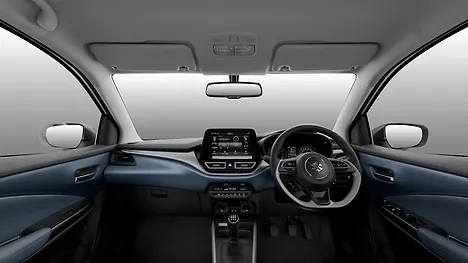
The new Maruti Suzuki Baleno brings a major mechanical change under the bonnet. It now gets the 1.2-litre, three-cylinder Z-Series naturally aspirated petrol engine that debuted with the current-generation Swift and was later introduced in the Dzire.
While the engine has already found its way into two of Maruti Suzuki’s popular models, its arrival in the Baleno has raised a few eyebrows. The reason is simple — the outgoing Baleno had a four-cylinder petrol engine. So, does losing a cylinder make the new Baleno less desirable?
Power is down, but torque remains almost unchanged
The outgoing Baleno’s 1.2-litre four-cylinder petrol engine produced 90bhp and 113Nm. The new Z-Series unit develops 83bhp and 112Nm.

On paper, that is a reduction of 7bhp in peak power, while the torque figure has remained almost identical. So, purely from the numbers, the new engine cannot be considered a performance upgrade over the outgoing unit.
However, there is more to the change than the power figure. The Z-Series engine has been developed with a greater focus on efficiency, and that is reflected in the Baleno's claimed fuel economy.
Efficiency is the big change
The new Baleno claims up to 23.80kmpl with the manual gearbox and 24.77kmpl with the AMT. This is higher than the claimed figures of the outgoing petrol versions.
So, the basic trade-off is clear on paper: less peak power, almost identical torque and improved claimed efficiency. Whether that trade-off works for the Baleno will be something we can assess properly once we test the car extensively.
What about refinement?
This is another area where the three-cylinder configuration naturally raises questions.
A three-cylinder engine has a different mechanical character from a four-cylinder unit, including differences in vibration and engine note. But that doesn't necessarily tell us how the engine will feel in the Baleno.
We already have some reference points in the form of the Swift and Dzire, both of which use the same Z-Series engine family.
The Swift was the first Maruti Suzuki model in India to introduce this engine, followed by the Dzire. Both cars have therefore given us an indication of what to expect from the Z-Series in terms of its overall character.
However, the Baleno gets its own engine calibration, and its performance and refinement will ultimately have to be judged on the car itself.
The Swift and Dzire have already paved the way
The move to three cylinders isn't new for Maruti Suzuki anymore.
When the Swift made the switch from its earlier four-cylinder engine, there was considerable discussion around the change. The Dzire then adopted the same engine, further expanding the use of the Z-Series in Maruti's range.
The engine has also delivered strong claimed efficiency figures in both models, which shows why Maruti has continued to use this powertrain across its newer products.
The Baleno's arrival is therefore less about introducing an untested engine and more about extending Maruti Suzuki's current 1.2-litre petrol strategy to another model.
So, is it a deal breaker?
On paper, the three-cylinder engine does mean giving up some peak power compared to the outgoing Baleno. That much is clear.
At the same time, torque has barely changed and the claimed fuel efficiency has improved. We also have the Swift and Dzire as real-world reference points for the Z-Series engine, although the Baleno itself still needs to be driven before any conclusions can be drawn about its performance or refinement.
For now, therefore, the cylinder count alone shouldn't be enough to write off the new Baleno.
The more interesting question is whether the 7bhp reduction in peak power is something buyers will notice enough to care about, and whether the improvement in claimed efficiency makes the trade-off worthwhile.