Why Would I Buy It?
- Improved on-road dynamics
- Increased off-roading aids
- Strong, refined engines
Why Would I Avoid It?
- Two doors limit practicality
- No luggage space to speak of
Introduction
Meet the Thar Roxx Mini. No, that's not its official name, but for more reasons than one, that's exactly what the new Thar three-door is. And for the better, which we will get into in this review.

Moreover, even though it looks like a facelift compared to the previous Thar three-door, this is actually a generational upgrade. Now, it continues to fit the 'second-car' brief better than the 'only-car' one, but a second car that now offers better on-road dynamics and more off-roading aids, while still looking good.
Exterior Design
9 / 10
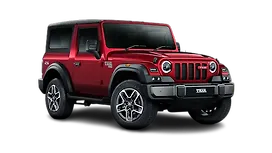
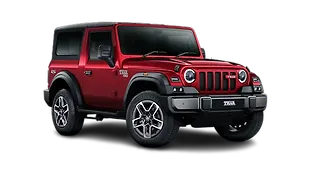
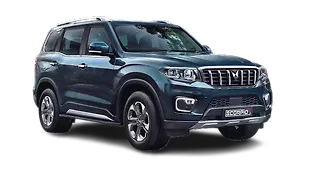
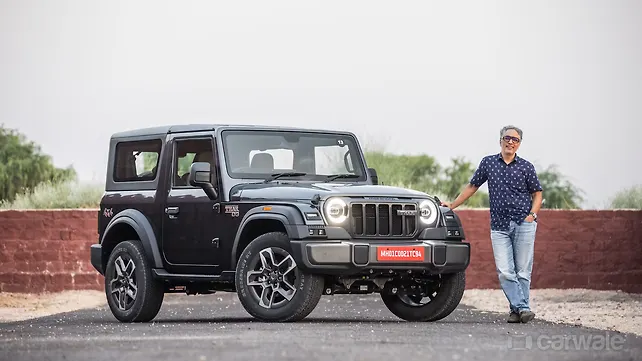
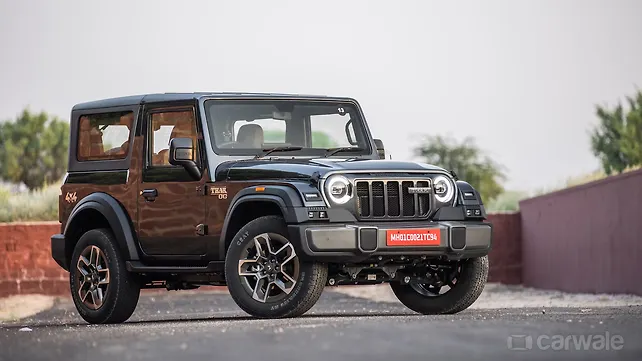
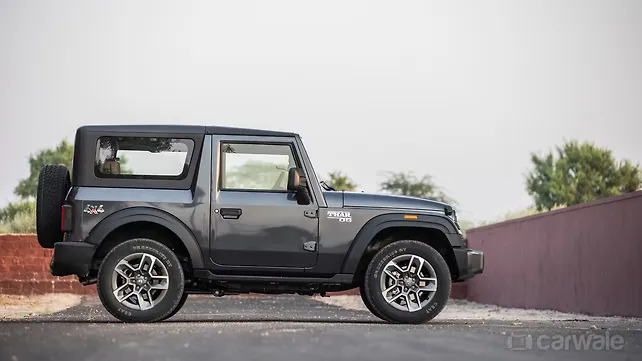
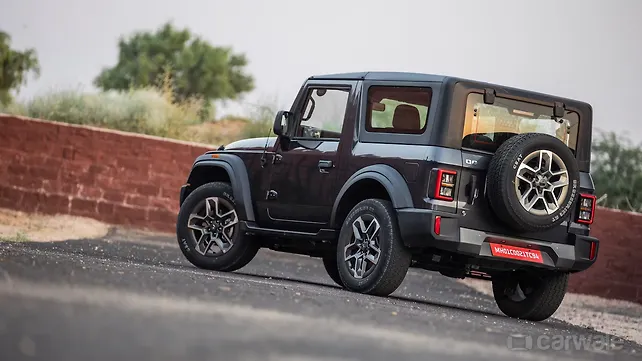
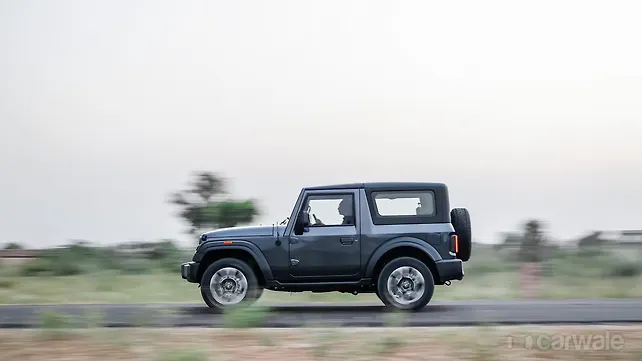
Speaking of looks, not much has changed on the design front. It still has the same silhouette and the same design elements. The doors, various other body panels, as well as the roof continue as is too.
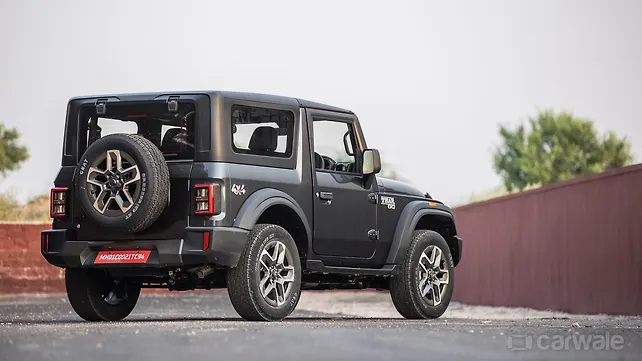
You do get different headlamps, which are borrowed from the Roxx, along with a new grille and some added LED elements. The tail lamps have changed as well. The alloy wheels are new; these are now 19-inch units on this top-spec ZXT trim. There is a slight improvement in its stance, with its nose sitting slightly higher than the previous model. Having said that, it is still unmistakably a Thar.
Interior Design
7 / 10
Mahindra had updated the Thar three-door only last year. And almost all of that was concentrated on making the cabin a nicer place to be in. Those upgrades continue unchanged on this car.
These include the 10.25-inch touchscreen, the steering wheel, the front central armrest, power window switches on the door pads, and aircon vents for the rear passengers. Additionally, the new Thar now offers cup/bottle holders for the two rear passengers. The seat upholstery has changed. And the vents console now has a cubby to hold a cellphone.
Improved as it might be, the Thar is still ergonomically not completely sorted. In the automatic we have here, my left knee was constantly hitting against the centre console. And because the footwell doesn't have a lot of space, I couldn't do much about it. It is also not a cabin one can spend long hours in, but it is better for those who will choose to do it anyway.
Features
7 / 10
The three-door Thar now has a more comprehensive features list. For comfort and convenience, there's keyless entry and start, a height-adjustable driver's seat, steering-mounted controls, a rear wiper, grab handles all around, cruise control, and, carried over from the previous update, an internally opening fuel lid. Who would have thought this would deserve a mention? Other important bits include TPMS, front and rear parking sensors, and electric ORVMs.
This is also the Thar for dummies when it comes to off-roading. So, the 4WD version comes standard with Terrain modes designed to handle Mud, Snow, and Sand when you can't. Each mode changes how the traction control, steering, throttle response, and gear shifts respond so that you make it to the other side like a pro. There's also an electronic diff-lock to handle really challenging situations.
Infotainment
7 / 10
The touchscreen infotainment system is carried over from the previous update. It is a nice-looking system. It is easy to read, intuitive and with a reasonable amount of functionality. It can, however, get a bit laggy at times, which then requires some patience. It also only offers wireless Android Auto, with Apple CarPlay connection still being offered in the wired variety.
The system has an off-road graphics display that, among other things, shows you the lean angles you're using. It's nice gamification of sorts when you're driving off-road and gets you a little more involved in the activity. The sound from the audio setup, meanwhile, is still rear-biased. It's not a setting I enjoyed, and playing with the balance setup didn't help much either. Given the Thar three-door will be self-driven more often than not, the audio balance is something Mahindra could have worked on.
As for the rear parking camera, it is of reasonable quality. It helps you place the car properly. But it is still not great.
Safety
8 / 10
This is the top-spec ZXT trim that we're driving, and for safety, you get ESP with rollover mitigation, six airbags — dual airbags upfront and four HPTS side airbags — along with a roll cage, ISOFIX child-seat mounts and three-point seat belts everywhere.
There is also a seat-belt reminder, Passenger Occupant Detection System, speed-sensing front door locks, panic braking signal and vehicle overspeed warning. Safety-wise, it is taken care of in that sense. It isn't extensive; there is no ADAS. But it checks the minimum boxes that you'd want safety-wise in your car.
Space and Storage
6 / 10
Storage options continue like before. You've got two cupholders in the centre at the front, some small storage under the central front armrest and two bottle holders in the front two door pockets. Now you get cupholders at the back in the armrest for rear passengers as well. The boot space, as always, is extremely limited and there isn't much that you can put in.
Of course, you can fold the rear seats and that liberates some room. But now that it is a little more comfortable to travel with four people in it, weekend getaways are a real possibility. But to do that, you'd have to get a roof rack to stow away the luggage on.
As for seating, the front seats are roomy and supportive. There is enough headroom, and given the width of the Thar, two up front, thankfully, don't sit very close. Things are a lot cozier at the rear, though. Both head- and shoulder room is tighter but not inadequate. And there is surprisingly enough room for your knees too. The rear seat backs recline and, though there's no thigh support to speak of, in the hour I was seated at the back, I didn't find much to complain about.
Performance
8.5 / 10
We drove the diesel — the 2.2-litre, four-cylinder with 150bhp and 330Nm — in four-wheel-drive configuration with an automatic gearbox. It's the same powertrain combo as before, but it now makes a bit more power and torque. Not that it was short on output to begin with. There’s also the 1.5-litre diesel mated to a manual gearbox, and a near-160bhp, 330Nm, 2.0-litre petrol with both a manual and an automatic to choose from as well.
Our diesel is fantastically torquey. The moment we get on the throttle, we see its nose rise and, in a little over 10 seconds, we are sitting at three-digit speeds. Just like that. With no intent or effort. 120kmph comes and goes as easily. And it will continue going if you let it, and this should bode well for high-speed overtakes. It’s also an easy-revving engine. Yes, we can hear some clatter at higher revs. But, whenever we choose to ride the torque and let the auto ‘box do its short-shifting thing, up to 90kmph, the new Thar is a relatively quiet and peaceful place to be in. For all four involved.
Speaking of the gearbox, the six-speed automatic torque converter is lovely. There are no real delays in kickdown; the shifts are seamless; and there is no real head nod during upshifts. There’s manual override too, but via the stick and not paddle shifters.
Overall then, the performance makes the Thar feel light on its feet. If we didn’t know it weighed close to 1.8 tonnes, we would never have guessed it after driving it. That’s a good thing.
Ride and Handling
7.5 / 10
Remember we introduced this as the Roxx Mini? Here’s why.
The new Thar is the Roxx underneath. The same chassis and the same underpinnings — suspension, brakes, wheels, tyres, what have you. In fact, the two sit on exactly the same track lengths as well. And the two use the same electronically powered steering setup; the three-door Thar ditching the hydraulic setup in the OG version. But, there are some differences. The Thar sits on a 400mm shorter wheelbase. It also uses Tenneco’s Davinci valves (seen on the new 7XO) for better control over slow- and high-speed damping. This is, of course, in addition to the FDD dampers that the Roxx runs as well.
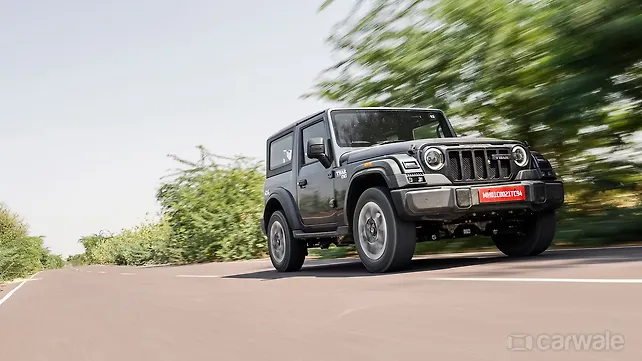
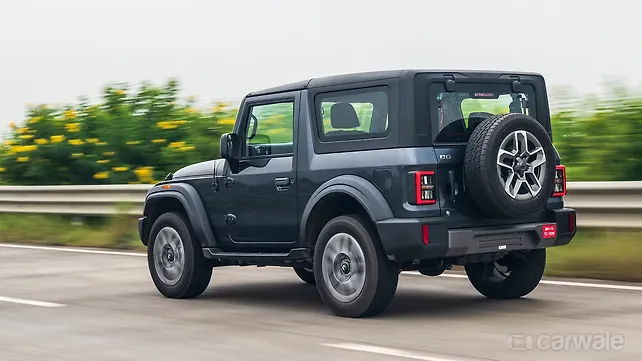
On the road, there is a marked improvement in ride and handling compared to the previous Thar. In fact, I will go on to say that the new three-door Thar is now a better car on the road than the Roxx even. The body movement is well controlled. There is no excessive roll or pitch. Show it low-amplitude, high-frequency bumps and it rides over them without bucking or sending rude shocks to its occupants. It settles down quickly too. Show it a big dip in the road, and it again goes through it, comes out and completely settles down without drama or delay. There’s no wallowing or that odd floaty feeling.
But, is it plush? Soft? Superbly absorbent? No. There’s an underlying stiff-kneed feeling to it which never goes away. But I still wouldn't call it firm. Taut, maybe. But, it is the well-judged damping which gives the Thar a settled and stable ride, which more than makes up for its lack of absolute plushness. The only time we had an issue is when going over a tall but short speed breaker. That’s when the rear kicked quite significantly. This was mostly when we were in the 20-30kmph range. Any faster or slower and the kick was significantly less.
We also found managing deeper potholes or bigger hits did bring back some of the old Thar’s characteristics. There was some amount of scuttle shake; the refinement in the suspension’s working took a dive; and it felt a tad harsh.
As for the handling, the new steering makes a big difference. For one, it has taken the unnecessary inputs that used to come through the hydraulic steering away. This has meant less fatigue no matter what the road underneath is like. It is also very quick and light, which made it wonderfully easy to make many-point turns with when we had to turn the Thar around on a narrow path.
Changing lanes now barely requires any steering input. It also turns into corners in a crisp fashion. Yes, push it hard, and it will roll and understeer, and the ESP will raise its judgemental head. But for the most part, when we were sensible with our inputs, the Thar surprised us with its alertness and composure. Not something one expects from this body shape and an SUV that’s meant to be an off-roader.
Braking again was brilliant. The Thar stops quickly and without drama or effort. It also requires very little power from your foot even under hard braking at high speeds. Another reason it feels lighter than it is. Plus, there’s good pedal feel to complement.
NVH
7 / 10
NVH-wise, up to 80kmph, the cabin is pretty quiet. One can barely hear the engine, and there isn't a lot of road noise seeping in either. Wind noise too, even though present, isn’t obvious. It is a decently well-insulated cabin. However, once you start pushing 100kmph, the wind noise increases significantly. And the faster you go, the worse it gets. Otherwise, the noise, vibration and harshness levels from the powertrain and the body, and from other touch points like the steering, pedals and seat, are very well contained across various speeds.
Verdict
7.5 / 10
The previous Thar, on paper, had the ingredients of being a very good second car. It had the visual attitude. It had lovely engines. It had the capability of going anywhere and doing anything. And that made it a worthy option. But, in the real world, it wasn’t the easiest car to live with, be it for commuting, running errands or maybe taking a weekend-long road trip. It was uncomfortable and tedious. And, one would get tired driving or travelling in it quite quickly. It just wasn't like a normal road-going car.
This new one bridges that gap beautifully.
It’s not perfect. It’s still not a car. But, the ride is more comfortable; it is rounded, settled, and liveable. The steering is light and quick and devoid of constant, tiring feedback. The braking is strong but effortless. And it retains its lovely and easy-to-love powertrains. You can do longer road trips with four on board in more comfort now. And driving to work and back should now be a breeze.
Plus, whatever Mahindra took away from the Thar’s inherent off-roading ability by making it more road-focused, it ploughed it back with handy off-road electronic driving aids. For instance, I switched it to Sand mode and took on some sand dunes, and it managed it all despite my poor off-roading skills. I could hear the car working overtime, but it made it through.
So, now you have a second car that’s safer, more comfortable, easier to live with, but one that hasn’t lost its attitude or comprehensively good off-road ability.