Why I Would Buy It?
- Additional features over the standard Venue
- Ride quality
- Improved cabin
Why I Would Avoid It?
- Refinement levels for powertrain
- No panoramic sunroof
Introduction

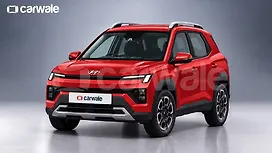
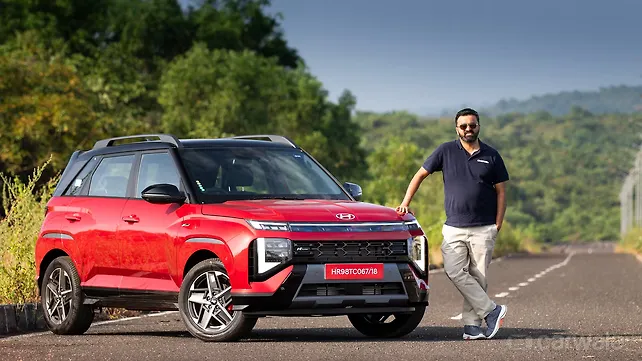
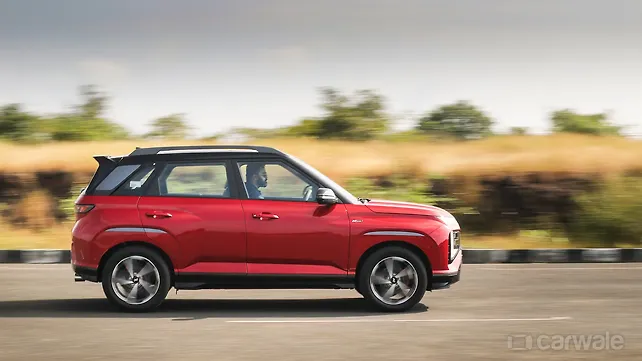
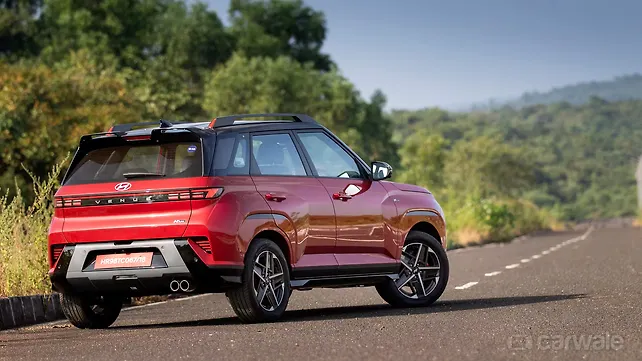
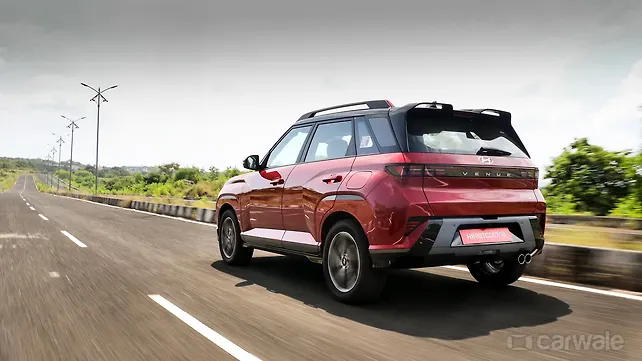
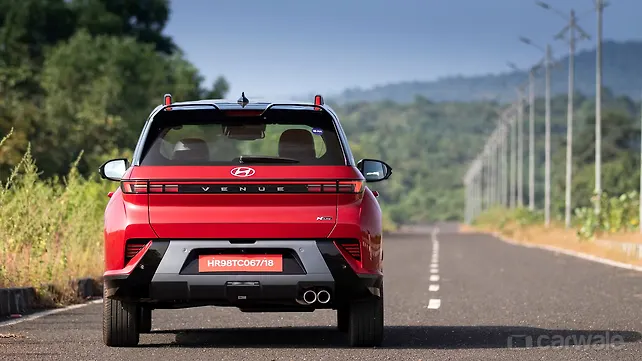
What you see in the photos is the new Hyundai Venue, which, for all intents and purposes, is the second generation of the South Korean automaker's popular and successful sub-compact SUV. A new platform underpins it, it has grown in size (including a bigger boot), and, in this top-spec N Line version we have driven, it is loaded with features. It's the first of Hyundai's 26 new vehicles planned for India by 2030, and also the brand's first software-defined vehicle for the subcontinent.
Design and Road Presence
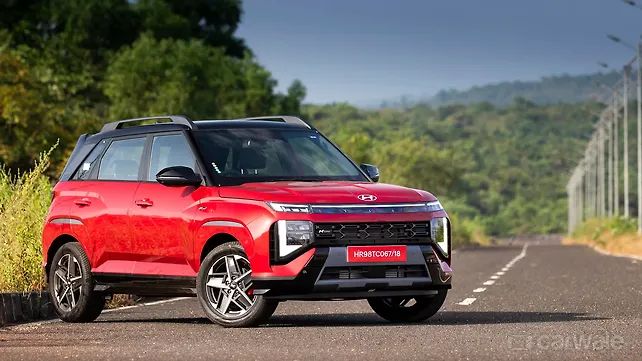
Hyundai has taken a bolder approach with the design of this new-generation SUV. The N Line for the first-generation car was a later addition to the range, and there wasn't too much latitude for Hyundai to separate both cars in terms of looks. But that's not the case here, and Hyundai has done quite a bit to help step up the game between the standard car and the N Line model.
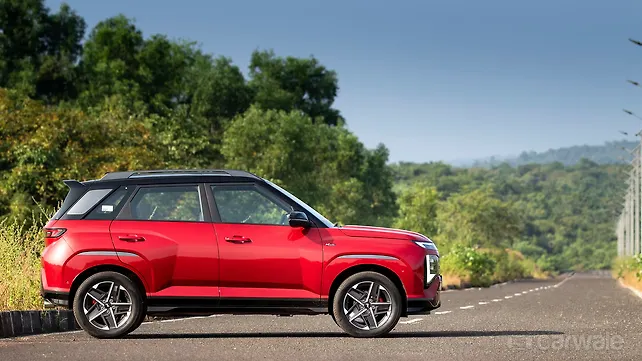
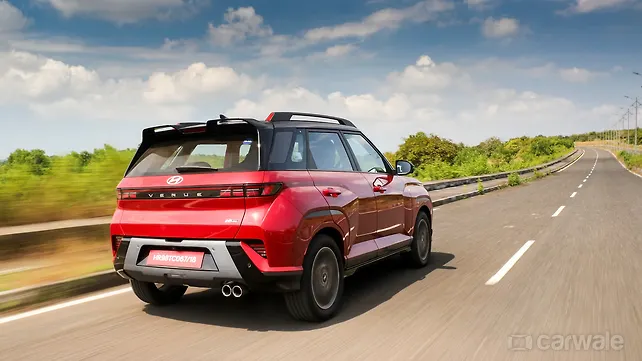
There are new bumpers front and rear, new design for the LEDs, sporty 17-inch alloy wheels, red brake callipers, and dual off-set chrome exhausts to round up the exterior highlights. Over this, you get a smattering of N Line badges and, more importantly, some really bright paint schemes that give the car its sporty credentials. Special package cars have now taken off in India and Hyundai has done more than enough to make you want to buy this one.
The N Line sportiness is one part of the car's looks package, whilst the second (applicable to the regular car too) is aspiration. In its three-quarter view, the Venue looks like the Creta, which looks like the Alcazar, which then looks like larger models like the Santa Fe and Tucson. A family look means Hyundai's buyers will, in theory at least, either have higher aspirations to move up the Hyundai chain or get pulled into buying a similar-looking car that their budget permits.
Interior and Features
This has always been the automaker's forte, and it has delivered on that front in terms of raising the stakes in the segment. The complete feature list is available on our model pages, and so here we are mainly going to go over a few of the hero features. At the top of this list are Hyundai's new dual 12.3-inch curved displays. Big displays have now become the norm and this is the biggest that's on offer in this part of the market. They are bright, rich in detail, and add well to the car's tech-heavy nature.
Taking a leaf out of the mobile phone experience, the interface is simple, familiar, and easy to use, but now crammed with more features that are easily accessible within a few folds. Also equally impressive is the instrument cluster, which is crisp, colourful, and can be customised in terms of fonts and colours. The front seats now get ventilation and there is a power function for the driver's seat, but height adjustment is still a manual affair, which is not a deal-breaker, but is one of those odd things that comes with the car.
Hyundai has also gone big on over-the-air updates, as this is their first software-defined vehicle and comes with over 70 controllers. This means you never have to visit the dealership for updates, but how this pans out over multiple updates over the years is something we will only get to know in the future.
We also liked the quality of the materials used in the cabin, which has been upgraded from the outgoing model and, in this N Line variant, is an all-black affair with red stitching on the dash, centre console, and steering, all hallmarks of the quintessential 'sporty' model in the range. Everything feels premium to touch and looks uncomplicated but, at the same time, offers a large chunk of visual appeal. One of the nice touches that Hyundai has gone in for is a good mix of buttons and knobs, which is a welcome sight both for the eyes and hands in this age of cramming everything into the infotainment display.
The dimensions of the car have also increased and this has translated into some additional space at the back in terms of headroom and knee room, but shoulder room is still tight. Unless you really need to, the Venue's second row is strictly a two-person affair. Hyundai has left out a panoramic sunroof even on the top-spec model, and this design has allowed them to eke out the additional headroom required.
Finally, the Venue now gets a bigger boot, which has expanded by around 25 litres, and whilst that doesn't seem like a huge number, it does mean you can fit in an extra bag or two that would have otherwise had to go into the second row. The seats fold down in a 60:40 split ratio for additional storage.
Drive Experience
We got behind the wheel of the 1.0-litre GDi turbo petrol that produces 118bhp and 172Nm. It can be had with either a six-speed MT or a seven-speed DCT, the latter of which is what we have driven in our review.
On paper at least, it's a likeable powertrain, with decent numbers to give this car some zippy performance when needed, something that becomes evident if you drive with a heavy(ish) right foot. The dual-clutch gearbox is competent but struggles with low-end torque, especially when getting off the line. However, once you get going, the speed builds up quickly and with surprising ease towards the three-digit mark. What's more, this is an AT, so you are never going to stall in traffic or have to constantly clutch-in-clutch-out to inch along in traffic.
The powertrain is fun to use, but you can feel the vibrations in the steering wheel and gear lever, a by-product of this being a three-cylinder engine. But you could look at this as something that adds to the fun element of the car when you see it in combination with the rorty exhaust note coming out of those twin chrome pipes.
In a straight line, it did the 0-100kmph test in 11.15 seconds, which is a surprise, considering the sporty nature of the car. However, some of that is down to the way the gearbox has been tuned, as in a similar test, the diesel AT was faster off the line but climbed through the numbers slower than this 1.0-litre GDi turbo petrol and hit the 100kmph mark in 12.36 seconds. It is likely that if this engine offered more torque, it would easily be able to hit 100kmph in 10 seconds or less.
Ride and Handling
One of the places where Hyundai has done its homework for this new generation of the Venue is ride quality. Underpinned by a newer platform, the ride has become more plush and got flatter compared to the outgoing model. Over rutted roads and massive imperfections, there was little to fret about as the Venue did its thing of ironing them out without displacing the occupants. Even in this N Line variant running 17-inch wheels, there were no issues, though, as compared to the standard car, you do feel the firmness of the ride.
Another place where Hyundai has done some good work is the steering. It weighs up very nicely as you go faster, offering sufficient feel, but at the same time makes light work of the car at low speeds, especially when you need to parallel park.
Verdict
The Venue was a success right off the bat, and honestly, even if Hyundai had just upgraded the features on the first-gen car, it wouldn't have missed a step. This upgrade to a new generation is a massive one, be it in terms of features or drive experience. Yes, it doesn't have a panoramic sunroof, rear seats are still cramped, and the GDi turbo petrol could do with more refinement, but none of these are deal-breakers in what is the first fighter in Hyundai's next generation of cars. At the time of writing this review, the Hyundai Venue range was priced from Rs. 7.90 lakh to Rs. 15.69 lakh, whilst the N Line that we have driven was priced at Rs. 10.55 lakh to Rs. 15.48 lakh (ex-showroom).
Photography: Kaustubh Gandhi